
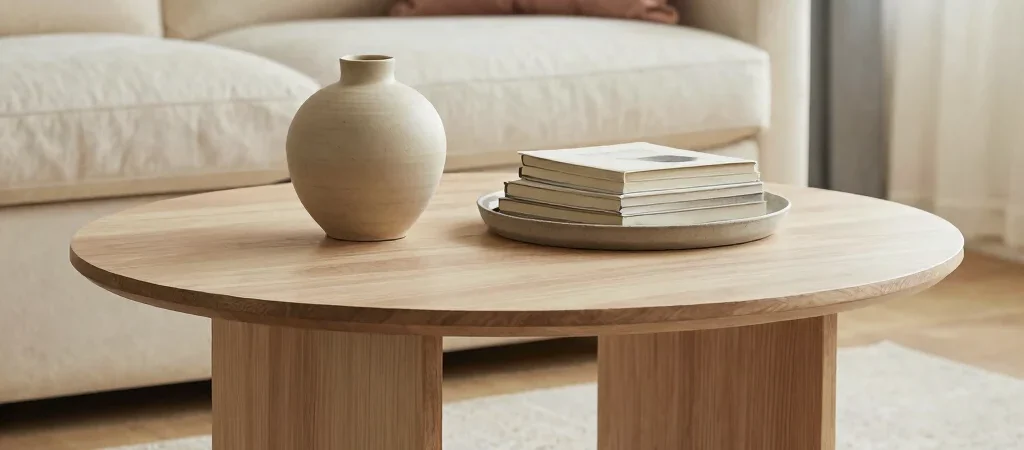
Sometimes a living room feels almost right, but the coffee table is a landing zone for remotes and yesterday’s mug. The finishing touch is rarely another large piece of furniture; it is usually a small edit that gives the everyday objects a place to belong.
Begin With One Surface
Choose the spot you notice most, such as a bedside table, entry console, or coffee table. Clear it first, then return only what is useful or lovely to look at; styling a smaller area makes the change feel manageable and keeps the rest of the room from becoming a project.
A tray can gather loose items on a coffee table or dresser, while a catchall dish gives keys and jewelry a consistent home. Pick a size that leaves part of the surface open so the room still feels easy to live in.
Mix Height and Texture
A low stack of books, a small vase, and one object with a different texture create more interest than several pieces at the same height. Try pairing smooth ceramic with woven material or glass, and keep the palette close to the room’s existing colors.
For a narrow console, keep taller pieces toward one end so they do not block the view across the room. On a bedside table, choose a lamp and one small accent rather than crowding the spot you need for a glass of water.
Leave Room to Live
Decor should make a room feel more pulled together without making it harder to use. If you have to move three objects just to set down a cup, edit the arrangement until the useful space comes back.
Try the finishing touch you already own before adding something new: move a vase from another room, gather loose pieces on a tray, or swap a cushion cover. Often that small reset is enough to make the space feel considered again.